Play Nirvana
— Trust Center
A scalable system that translates complex regulatory and security requirements into a clear, user-centered product experience for regulators, partners, and clients.
A centralized platform designed to communicate compliance, security, and operational trust to partners, regulators, and clients.
A scalable system that transforms complex compliance data into a clear, structured, and accessible experience.
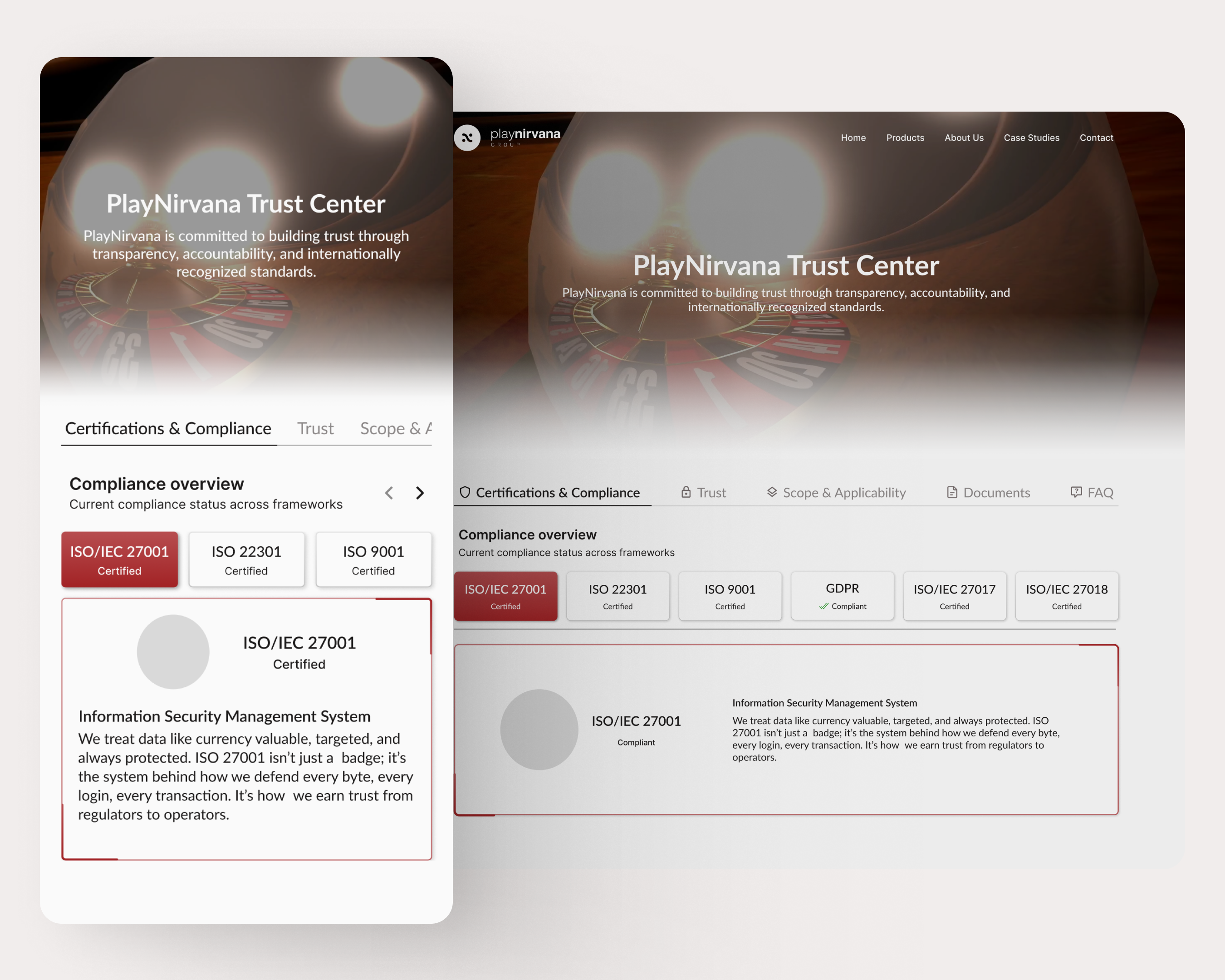
PlayNirvana Trust Center is a centralized platform designed to communicate compliance, security, and operational trust to partners, regulators, and clients.
The brief was to design a scalable system that transforms complex compliance data — ISO certifications, GDPR frameworks, audit timelines, internal processes, restricted documents — into a clear, structured, and accessible experience.
This wasn’t a UI problem. It was a complex information and trust problem.
Compliance data is technical, long, and difficult to interpret. It’s written for audits, not for usability — and the people who need it most rarely have time to read it end-to-end.
Three stakeholders approach this information with very different expectations. Regulators need proof: verifiable certifications and scope clarity. Partners need access: controlled paths to the right documents. Clients need trust: confidence that the operation behind the product is sound.
The content itself spans ISO certifications, GDPR frameworks, audit timelines, internal processes, and restricted documents. The core problem: how do you turn dense, technical, multi-layered compliance data into a structured, navigable, and trustworthy product experience?
Started from raw documentation (ISO, GDPR, audit data) and broke it into five core domains: Certifications, Scope & Applicability, Trust, Documents, and FAQ. Each domain was mapped to one of three primary user types — regulators, partners, clients — with its own entry point into the system.
“Trust is not built by having documentation. It is built by making that documentation understandable, accessible, and verifiable.”
— Project principle
I started from raw documentation and broke it into core domains — Certifications, Scope, Trust, Documents, FAQ — then mapped those domains to the three user types so the system could be navigated in parallel rather than read end-to-end.
Deconstruct the system.
Break raw regulatory documentation into core domains: Certifications, Scope, Trust, Documents, FAQ. Each domain becomes its own surface.
Define user needs.
Three user types, three intents. Regulators need verification, partners need controlled access, clients need confidence.
Structure content.
Convert long-form policy into modular sections, clear hierarchy, scannable blocks, and progressive disclosure.
Design parallel access paths.
Not linear pages. Users can explore certifications, verify scope, download documents, or understand operations independently.
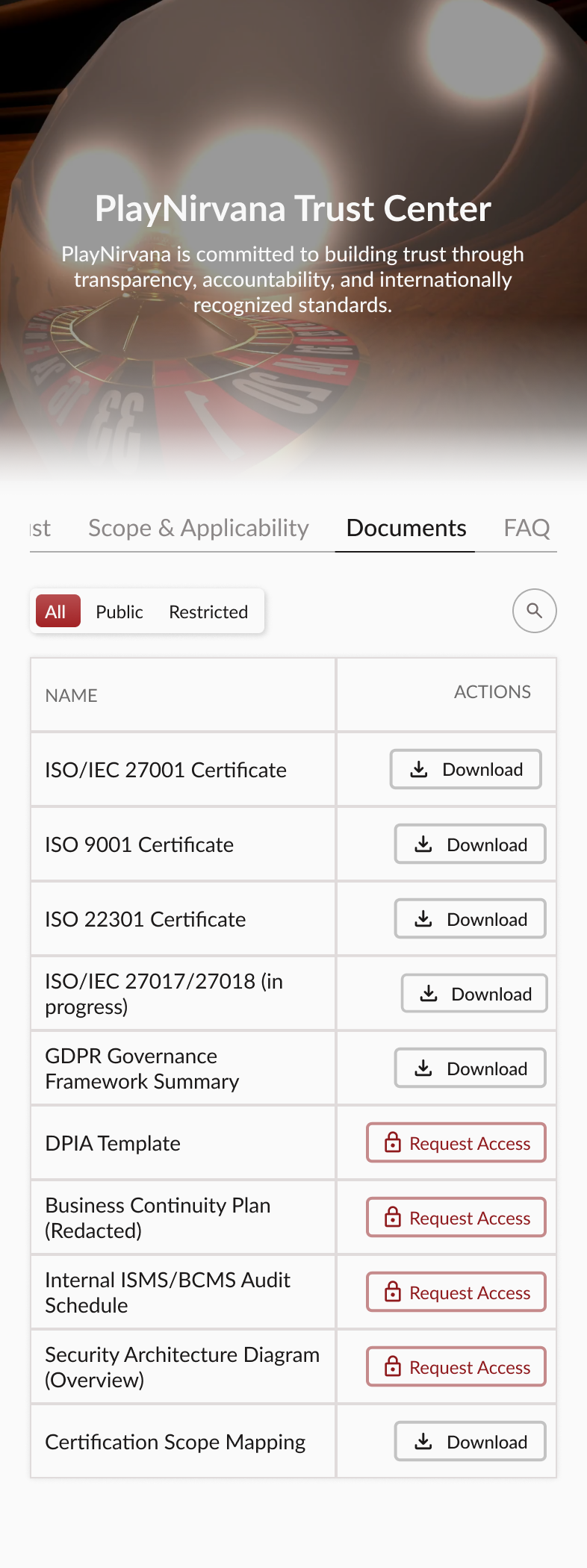
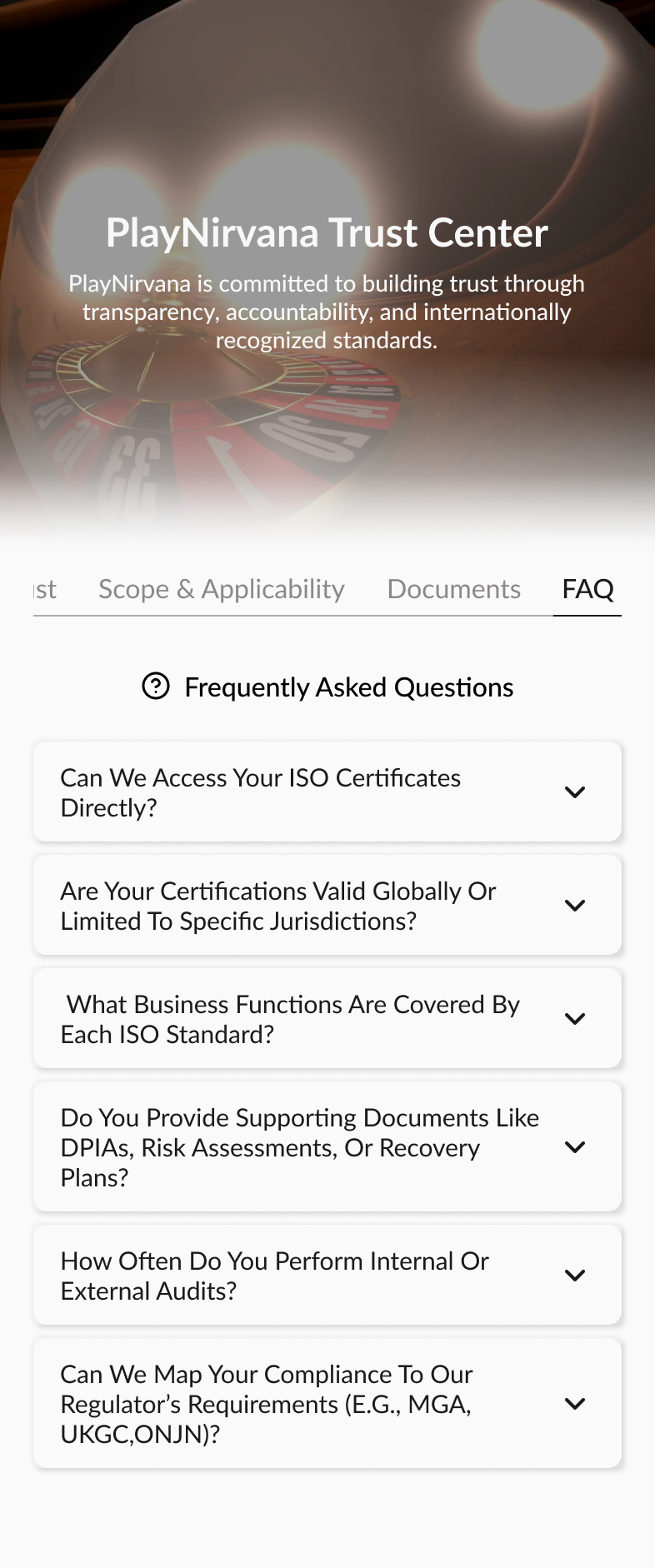
A tab-based architecture where each section represents a different dimension of trust. Certifications offer proof, Scope shows applicability, Trust exposes operations, Documents control access, FAQ provides clarity.
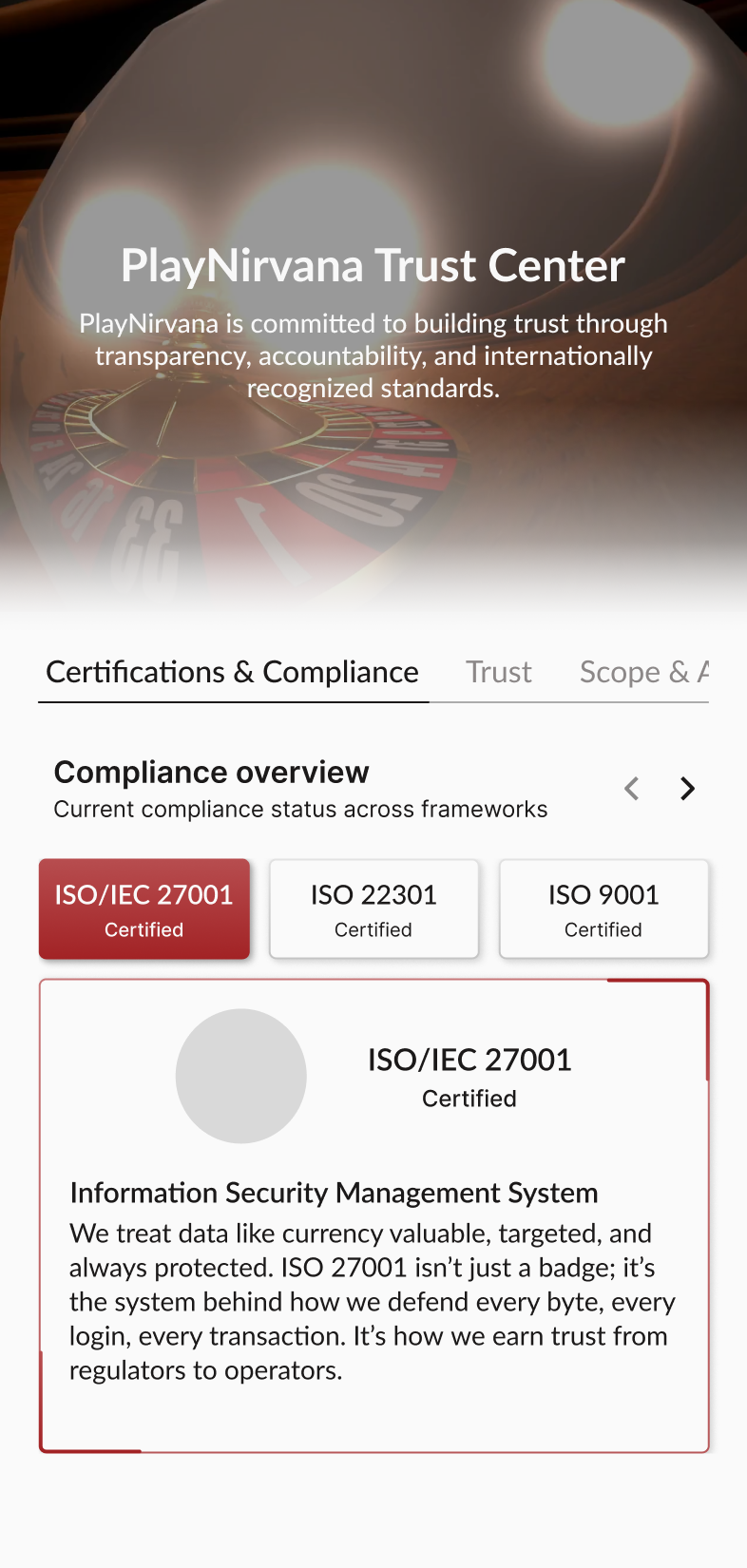
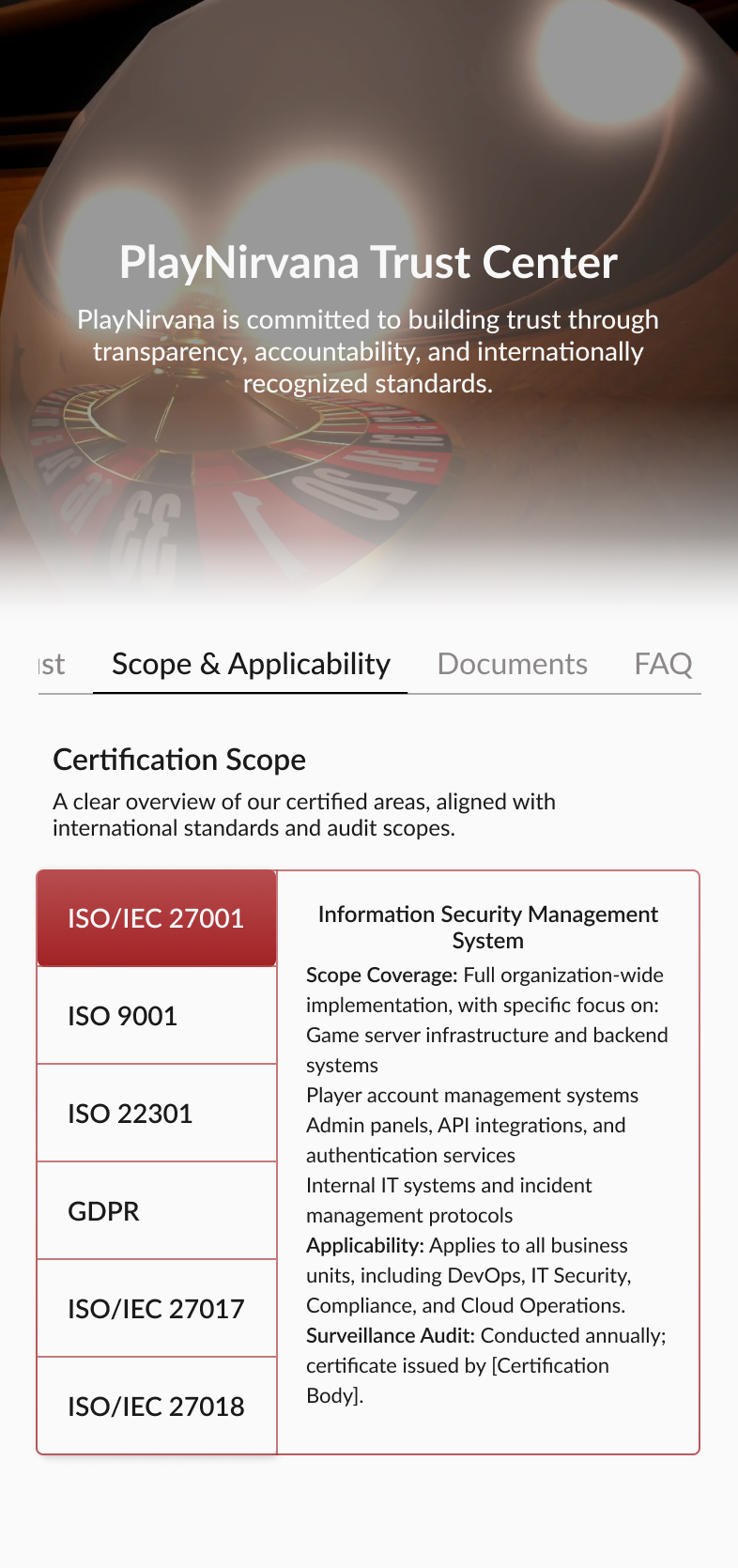
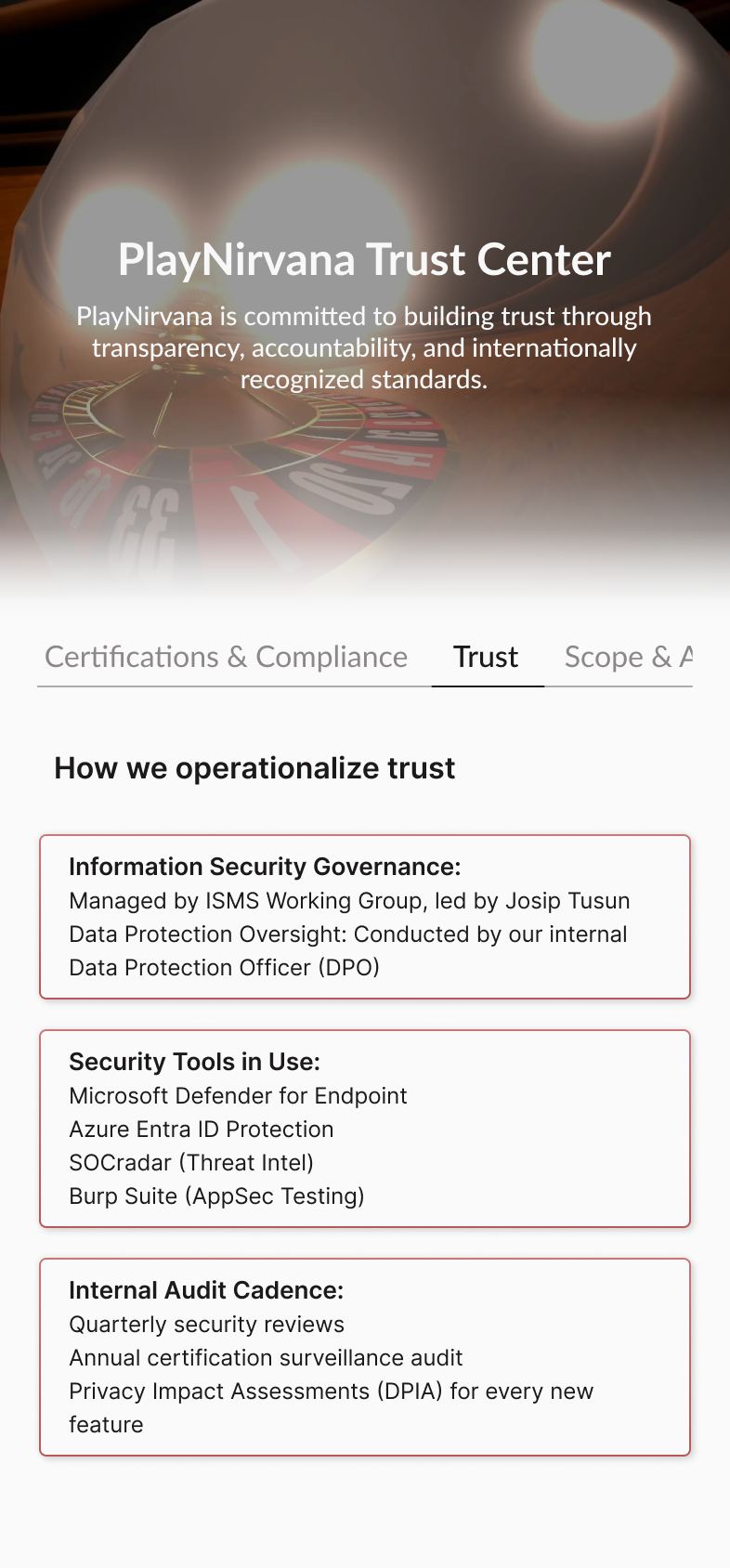
Design trust as a system, not a page.
Separate the experience by intent.
Balance transparency with security via access levels.
Use progressive disclosure throughout.
Turn documentation into product.
What qualitatively moved, and why.